
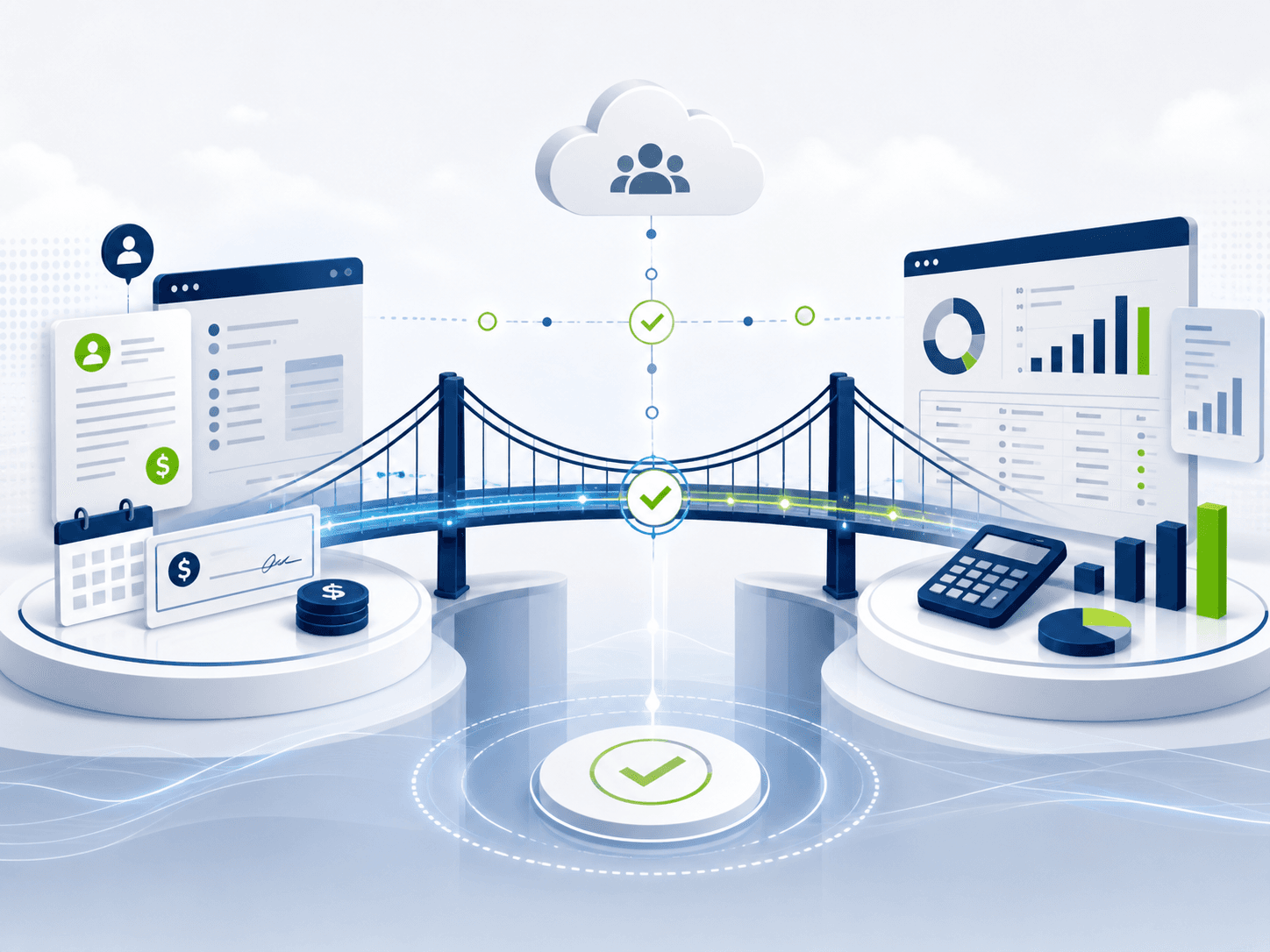
Payroll and Finance teams have long struggled with ensuring payroll costing is accurate before it hits the General Ledger. Traditionally, validation was reactive, meaning issues like failed accounting or incorrect postings were only discovered after payroll was finalized. This lack of early visibility often led to manual GL entries and urgent corrections. The Oracle Cloud Payroll Costing Reconciliation Tool was developed to transform this process, allowing teams to validate costing proactively during the payroll calculation phase.
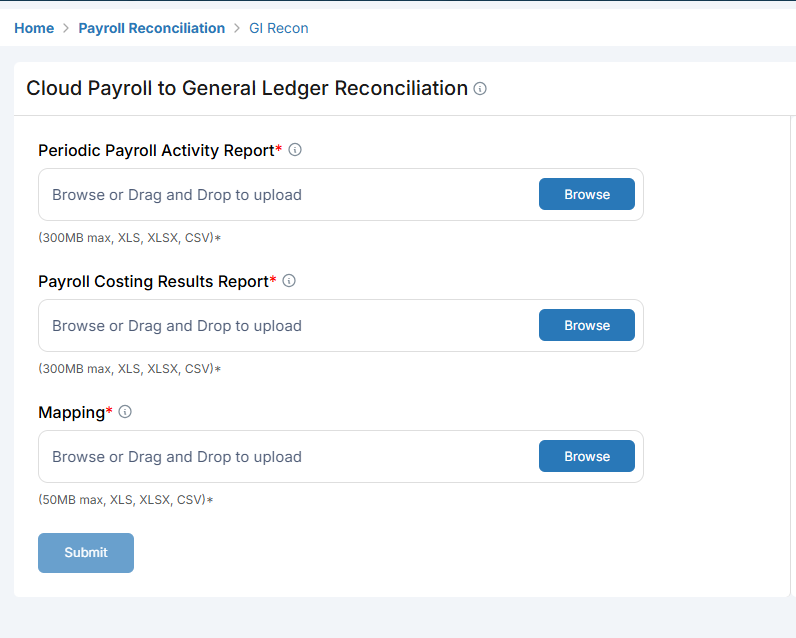
Three Simple Inputs for Early-Stage Validation
To move from reactive fixes to proactive control, the tool requires three core inputs: the Oracle Costing Results Report, the Payroll Activity Report, and a one-time mapping setup. Once submitted, the tool generates comprehensive results within minutes, enabling teams to detect and resolve issues before they affect financial reporting or require downstream corrections.
Key Insight: Ensure your one-time mapping setup is completed accurately to maximize the tool’s diagnostic power.
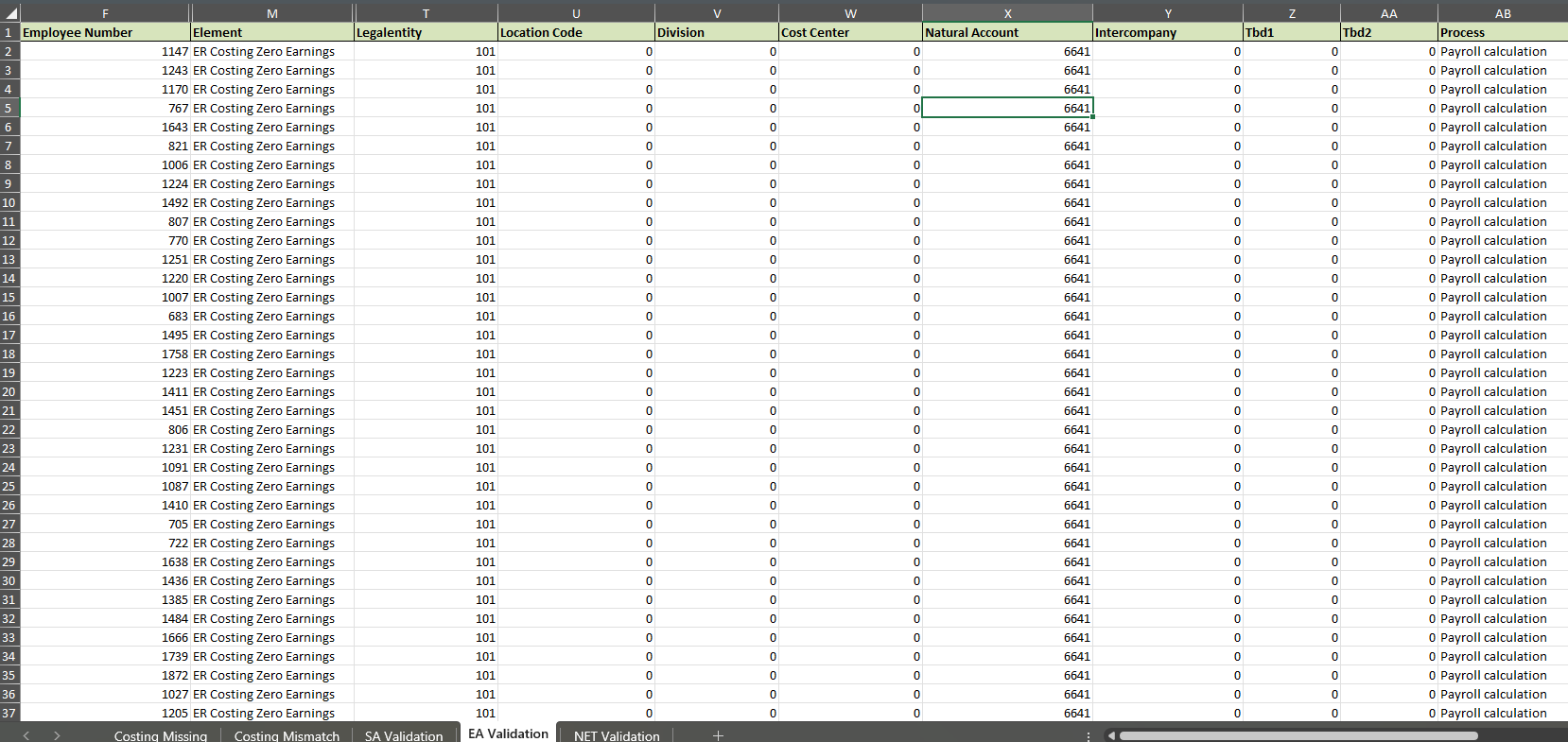
Identify Incorrect or Default Costing Segments
Even when payroll posts to correct accounts, incorrect reporting segments—such as Cost Center, Location, or Division—can lead to inaccurate financial reports. The tool identifies default segment values, incorrect assignments, and missing reporting dimensions across employees, ensuring every penny is allocated to the correct organizational unit.
Key Insight: Reviewing ‘Natural Account’ and ‘Cost Center’ segments early prevents reporting discrepancies that typically surface during month-end close.
Validate Element-to-Account Mappings
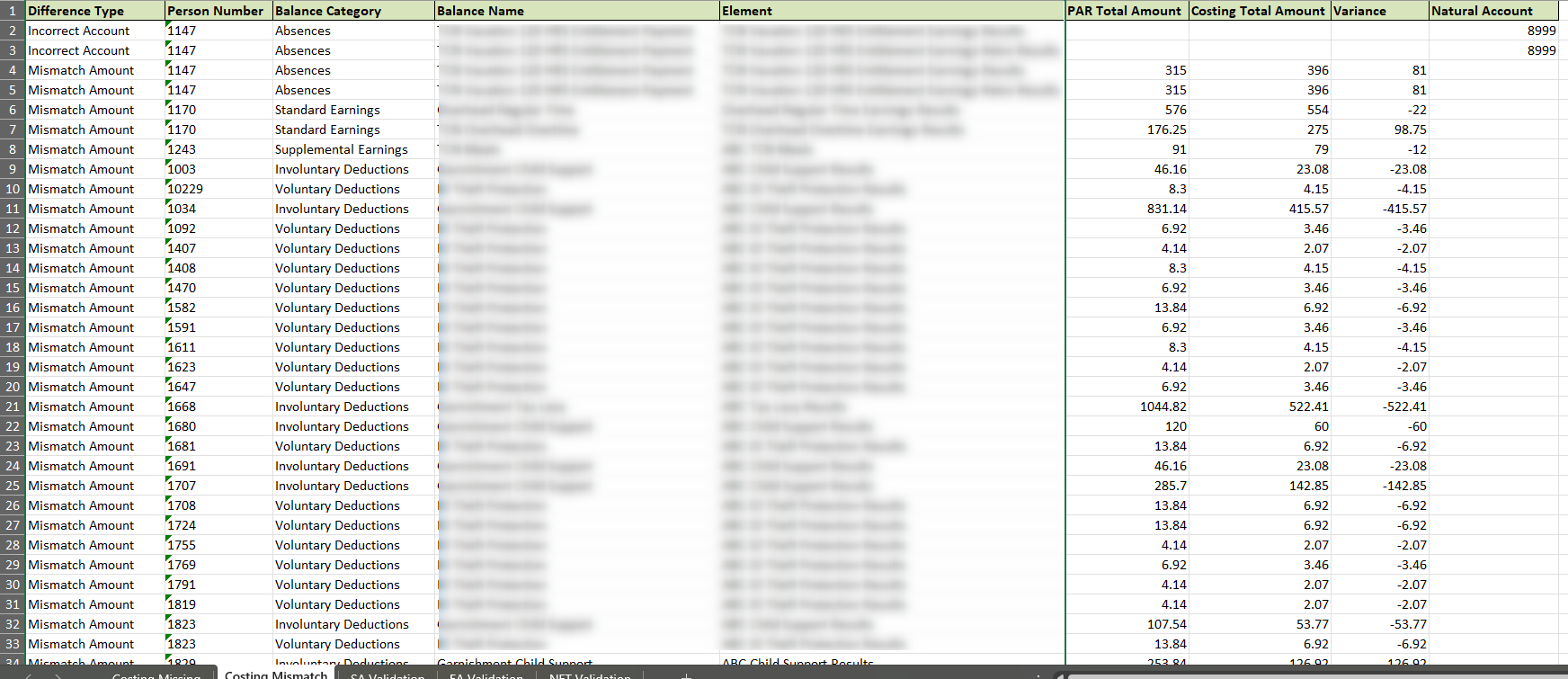
If pay elements are not properly mapped to accounts, Create Accounting may fail or post incorrect data. The tool validates the completeness of your costing configuration and checks specific element-to-account mappings to ensure the GL receives accurate information the first time.
Key Insight: Use the ‘Difference Type’ column to quickly filter between ‘Incorrect Account’ and ‘Mismatch Amount’ errors.
Detect Missing Costing Configurations
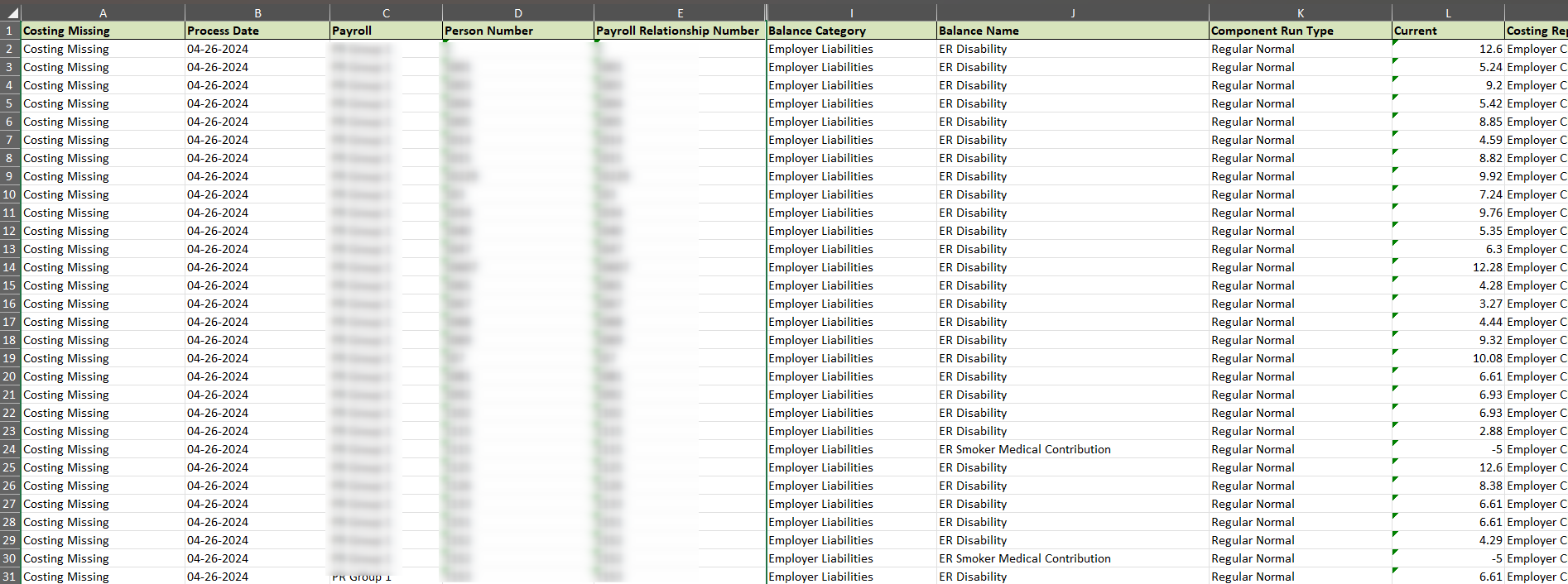
Missing costing for specific elements is a common cause of Payroll vs. GL mismatches. The tool identifies these missing elements and the impacted employees, preventing incomplete financial reporting that might otherwise go unnoticed for weeks.
Key Insight: The tool lists impacted employees by Person Number, making it easy to identify which records need immediate configuration updates.
Resolve Suspense Entries and Validate Net Pay
The tool provides a centralized view for identifying suspense account entries and their root causes. Additionally, it performs a critical Net Pay validation, comparing the Payroll Activity Report against the Costing Report. A mismatch here is a red flag for financial inaccuracies and potential GL reconciliation issues.
Impact: Confidence Before Finalizing Payroll
By shifting from reactive fixes to proactive control, Payroll teams reduce manual validation and eliminate last-minute surprises. Finance teams benefit from clean costing data and accurate GL postings, ensuring organizational trust and compliance through every payroll cycle.
Oracle Cloud Payroll Costing Reconciliation FAQs
Payroll costing reconciliation helps Payroll, Finance, and GL teams validate costing accuracy before payroll results create downstream accounting issues.
What is Oracle Cloud Payroll costing reconciliation?
Oracle Cloud Payroll costing reconciliation is the process of validating that payroll costing results are accurate before they are posted to the General Ledger. It helps confirm that payroll amounts, costing segments, account mappings, and reporting dimensions align correctly between payroll and finance.
Why is payroll costing reconciliation important before payroll is finalized?
Payroll costing issues are much harder to fix after payroll is finalized or after accounting has already been created. Validating costing earlier helps teams identify missing setup, incorrect segments, suspense account entries, and payroll-to-costing mismatches before they impact financial reporting.
What problem does the Oracle Cloud Payroll Costing Reconciliation Tool solve?
The tool helps Payroll and Finance teams move from reactive correction to proactive validation. Instead of waiting until Create Accounting or General Ledger review to find problems, teams can validate payroll costing during the payroll calculation process and resolve issues earlier.
What reports are required for payroll costing reconciliation?
The tool uses three key inputs: the Oracle Costing Results Report, the Payroll Activity Report, and a one-time mapping setup. These inputs allow the tool to compare payroll results against costing results and identify exceptions within minutes.
What types of costing issues can the tool identify?
The tool can help identify several common Oracle Cloud Payroll costing issues, including:
- Incorrect or default costing segment values
- Missing reporting dimensions
- Incorrect element-to-account mappings
- Missing costing setup for pay elements
- Suspense account postings
- Payroll Net Pay vs. Costing Net Pay mismatches
How does payroll costing affect the General Ledger?
Payroll costing determines how payroll expenses are allocated across accounts, cost centers, departments, locations, divisions, and other financial reporting segments. If costing is incorrect, the General Ledger may receive inaccurate or incomplete payroll expense data.
Why is validating Payroll Net Pay against Costing Net Pay important?
Payroll Net Pay and Costing Net Pay should align. When they do not, it may indicate financial inaccuracies, incomplete costing, or future General Ledger reconciliation issues. This check gives teams a clear signal that payroll and costing data need review before finalization.
How does the tool help with suspense account entries?
When costing fails, Oracle may route entries to suspense accounts. The tool helps identify suspense postings and their root causes so Payroll and Finance teams can correct the underlying setup before those issues create downstream accounting problems.
Who benefits from payroll costing reconciliation?
Payroll, Finance, GL, HRIS, and audit teams all benefit from payroll costing reconciliation. Payroll teams gain earlier visibility into errors, Finance teams receive cleaner costing data, and audit teams have a more reliable validation trail for payroll-related financial activity.
What is the difference between payroll reconciliation and payroll costing reconciliation?
Payroll reconciliation typically validates payroll results, payments, and deductions. Payroll costing reconciliation focuses specifically on how payroll expenses are allocated to financial accounts, costing segments, departments, cost centers, and the General Ledger.
